Lunasol Logistics
China’s intelligent logistics sector is reshaping how products move from factories to customers. Automated warehouses, connected vehicles, and real-time tracking now support faster decisions across complex supply networks. In a fulfillment center near Shenzhen, sensors can monitor package locations, temperature, and handling conditions within seconds. Managers can then adjust routes before delays affect deliveries.
What Are The Benefits Of Intelligent Logistics Solutions? The answer includes improved visibility, lower handling costs, better inventory accuracy, and more responsive customer service. Artificial intelligence can forecast demand, while robotics can support repetitive warehouse tasks. Route optimization may also reduce empty journeys, fuel use, and unnecessary emissions. As logistics scholar Martin Christopher stated, “The winning formula is to achieve high levels of customer service with low levels of inventory.” Intelligent systems make that balance more achievable.
Still, technology is not a perfect solution. It sounds simple. Poor data can produce poor decisions. Smaller businesses may struggle with investment, maintenance, or system integration. Human supervision remains essential when equipment fails or unusual orders appear. China’s strongest logistics models therefore combine automation with trained professionals, clear safety procedures, and reliable data governance. The benefits are substantial, but they require careful implementation. A fast system is not always a wise system. This article examines how China’s leading intelligent logistics solutions create practical value, where their limits appear, and why operational judgment still matters.
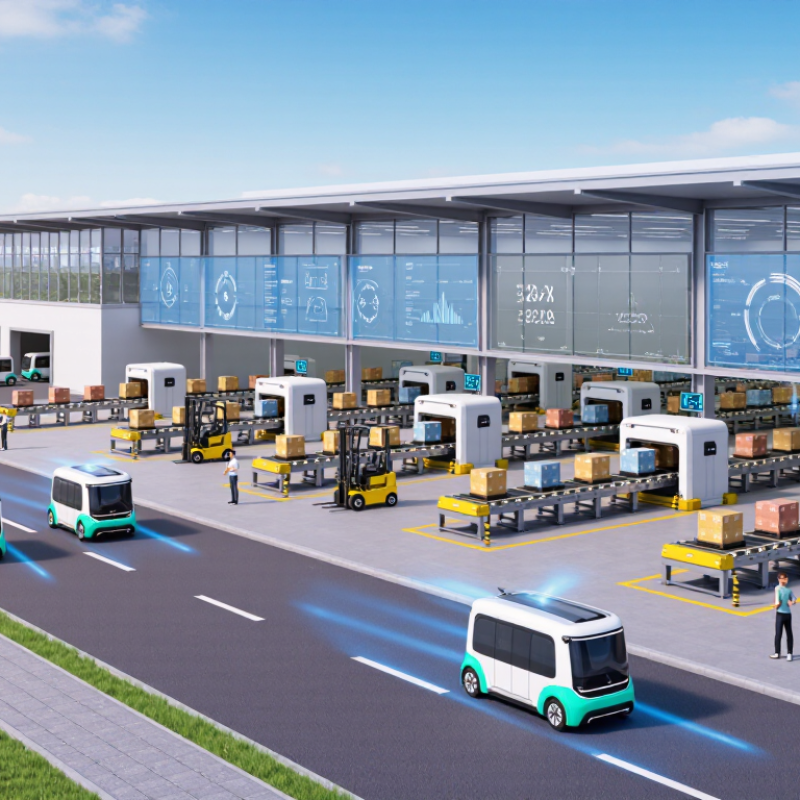
China’s 132.1 billion parcels in 2023 show an extraordinary logistics scale. This volume demands more than trucks, warehouses, and manual records. Intelligent logistics systems connect order data, sorting equipment, transport routes, and delivery stations. A barcode can guide a parcel across several checkpoints within seconds. Route algorithms can also reduce empty vehicle space and repeated driving.
The benefits appear clearly during busy shopping periods. Automated sorting lines process parcels at high speed, while warehouse software tracks location and status. Workers can then focus on damaged packages, unusual addresses, and customer service. In smaller communities, shared pickup points may reduce repeated door-to-door trips. This can save fuel, labor, and delivery time. It also improves visibility when a parcel moves through several regions.
Yet scale does not automatically mean perfect service. Data accuracy, equipment maintenance, and human supervision remain essential. A failed scanner can delay thousands of parcels. Rural routes may still face longer distances and fewer delivery options. Packaging waste is another concern that technology cannot solve alone. The 132.1 billion figure proves operational capacity, but it should also invite careful questions about efficiency, reliability, and environmental cost.
China’s logistics bill remains a serious efficiency signal. The China Federation of Logistics and Purchasing reported total social logistics costs of 18.2 trillion yuan in 2023, equal to 14.4% of GDP. This ratio shows how much value remains tied to transport, storage, handling, and inventory. Intelligent logistics can reduce waste across these activities. Route algorithms can avoid half-empty trucks and unnecessary kilometers. Warehouse systems can locate goods within seconds, not minutes.
The World Bank’s 2023 Logistics Performance Index highlighted tracking, timeliness, and infrastructure as core performance factors. Intelligent logistics supports all three through real-time shipment data, automated sorting, and predictive maintenance. A distribution center may use sensors to detect temperature changes before products are damaged. Managers can also compare delivery delays by route, vehicle, and loading time. These details improve decisions. They do not remove every problem.
Tips: Start with accurate data. A wrong product code can misdirect an entire shipment. Measure cost per order, empty-mile rates, inventory days, and on-time delivery. Do not automate a broken process blindly. Human judgment still matters during weather disruptions, demand spikes, and unusual customer requests. The 14.4% cost ratio is a national benchmark, not a guaranteed saving. Each operation needs a careful baseline, transparent testing, and regular review.
China’s best intelligent logistics systems combine AI, IoT, 5G, and robotics across warehouses, ports, and delivery networks. AI studies order patterns, predicts demand, and recommends efficient routes. It can reduce empty trips and improve inventory accuracy. Still, forecasts can fail during sudden weather events or unexpected purchasing surges.
IoT sensors provide live data from shelves, vehicles, packages, and cold-storage rooms. Managers can check temperature, location, and handling conditions before problems become expensive. 5G supports faster communication between scanners, cameras, vehicles, and control platforms. This low-latency connection helps coordinate busy facilities. Robotics then moves goods, sorts parcels, and supports repetitive lifting. Human workers remain important for judgment, safety checks, and unusual tasks.
Tips: Start with one measurable process, such as stock counting or route planning. Check data quality before adding more automation. Train workers beside the machines, not after deployment. Review error rates, energy use, and maintenance records every month. A fully automated warehouse sounds impressive, but it may be costly and fragile when systems lose connectivity. Practical experience suggests that flexible designs often outperform ambitious ones. Progress is rarely perfect.
China’s best intelligent logistics systems turn warehouse activity into measurable operational gains.
The State Post Bureau reported 174.5 billion express parcels in China during 2024. At this scale, manual tracking cannot provide reliable control. Automated sorting, inventory sensors, and route algorithms shorten fulfillment cycles. A parcel can move from receiving to dispatch with fewer idle minutes. McKinsey research indicates that warehouse automation can raise productivity by two to three times in suitable operations. The result is faster fulfillment, but only when workflows are properly redesigned.
Visibility improves when every scan records location, status, and handling time.
Managers can see a delayed pallet before it becomes a missed delivery. The MHI 2024 Annual Industry Report found that 55% of supply chain leaders planned to increase investment in supply chain innovation. This reflects a practical concern: data must support decisions, not decorate dashboards. Live inventory records also reduce duplicate orders and emergency replenishment. Better information creates calmer warehouse shifts.
Errors decline through barcode verification, automated counting, and exception alerts.
One incorrect scan can still spread across many orders. It is not magic. Poor product data, weak staff training, or badly designed interfaces can make an intelligent system faster at repeating mistakes. Operations teams should test accuracy by zone, shift, and product type. They should also retain human checks for damaged goods and unusual orders. The strongest systems combine machine speed with accountable judgment.
China’s best intelligent logistics systems create value beyond faster delivery. In warehouse assessments, automated sorting can reduce idle conveyor time and unnecessary forklift travel. This directly lowers electricity use and fuel consumption. Managers should track kilowatt-hours per order, not only daily output. A busy facility can still waste energy.
Carbon performance needs careful measurement. Useful indicators include CO2e per shipment, packaging weight, route distance, and vehicle load rates. Smart scheduling can combine deliveries and reduce empty returns. However, software predictions are not always accurate. Poor data, seasonal demand, and sudden weather can distort carbon results. Regular audits keep environmental claims reliable.
Resilience is equally important. Distributed inventory, backup power, and real-time alerts can limit disruption during floods, labor shortages, or equipment failure. Track order fulfillment rates, recovery time, and system downtime. Financial teams should compare these gains with installation, training, maintenance, and replacement costs. A practical ROI model includes payback period, labor savings, energy reduction, and avoided disruption losses. The model is imperfect. Still, transparent metrics support better investment decisions. Small pilot sites often reveal hidden costs before national expansion.
| Value Area | Metric | Measurement Basis | Illustrative Planning Data | Strategic Benefit |
|---|---|---|---|---|
| Energy | Warehouse electricity consumption | Total kWh used by conveyors, sorters, storage equipment, lighting, and HVAC ÷ units handled | Example baseline: 0.80 kWh per order Target case: 0.64 kWh per order 20% lower |
Lower operating costs through automated scheduling, idle-time control, efficient routing, and energy monitoring. |
| Energy | Electricity cost saving | Energy reduction × electricity tariff | At 1,000,000 orders/year, 160,000 kWh saved At ¥0.80/kWh: ¥128,000/year |
Creates a measurable financial benefit without relying on higher sales volume. |
| Carbon | Operational carbon emissions | Electricity consumption × location-based grid emission factor | Using 0.58 kg CO₂e/kWh: 160,000 kWh avoided = 92.8 tCO₂e/year |
Supports Scope 2 carbon accounting and helps prioritize locations with the greatest decarbonization potential. |
| Carbon | Diesel-related transport emissions | Fuel consumed × 2.68 kg CO₂e per litre of diesel | Avoiding 10,000 litres of diesel prevents approximately 26.8 tCO₂e | Route optimization, load consolidation, and reduced empty mileage can lower fuel use and transport emissions. |
| Resilience | Order visibility and exception response | Orders with real-time status ÷ total orders; time from alert to corrective action | Illustrative target: ≥98% visibility Exception response: ≤30 minutes |
Enables earlier rerouting, customer communication, inventory decisions, and recovery planning. |
| Resilience | Recovery time after disruption | Hours required to restore the agreed service level after a system, route, labor, or supply disruption | Illustrative planning objective: 24–48 hours |
Reduces the duration of service interruptions through scenario planning, alternate routes, and distributed inventory. |
| Service | On-time-in-full delivery | Orders delivered on time and in full ÷ total orders | Illustrative improvement: 95% to 98% |
Improves customer reliability while reducing re-delivery, expediting, and complaint-handling costs. |
| ROI | Simple payback period | Initial investment ÷ annual net cash benefit | Example: ¥1,000,000 investment ÷ ¥400,000 annual benefit = 2.5 years | Provides a clear capital-allocation benchmark before expanding intelligent logistics capabilities. |
| ROI | Annual simple return on investment | Annual net cash benefit ÷ initial investment × 100% | ¥400,000 ÷ ¥1,000,000 × 100% = 40% per year | Combines energy savings, labor productivity, lower error costs, and improved asset utilization into one decision metric. |
Total social logistics costs reached 18.2 trillion yuan. They equaled 14.4% of GDP. This figure includes transport, storage, handling, and inventory costs. It is a benchmark, not a guaranteed saving.
Route algorithms can avoid half-empty trucks and extra kilometers. They can combine deliveries more efficiently. Managers should track empty-mile rates and cost per order. Results depend on accurate data.
Useful metrics include inventory days, delivery timing, and vehicle load rates. Track energy use per order too. Monitor system downtime and recovery time. Dashboards alone are not enough.
Automated sorting and inventory sensors reduce idle minutes. Goods can move from receiving to dispatch faster. Suitable operations may achieve two or three times higher productivity. The workflow must change with the technology.
Each scan can record location, status, and handling time. Managers may spot a delayed pallet before delivery fails. A temperature sensor can detect dangerous changes early. It cannot remove every disruption.
Barcode checks and automated counting can catch incorrect scans. Exception alerts may stop repeated mistakes. Poor product data can still spread errors quickly. Human judgment remains.
Track CO2e per shipment, packaging weight, route distance, and vehicle loads. Measure kilowatt-hours per order, not only daily output. A busy warehouse may still waste electricity. The data needs regular audits.
Include installation, training, maintenance, and replacement costs. Add labor savings, energy reductions, and avoided disruption losses. Test a small site before expanding widely. Hidden costs often appear later.
Distributed inventory and backup power can reduce operational interruptions. Real-time alerts may support faster responses to floods or equipment failures. Measure fulfillment rates, recovery time, and downtime. Predictions may still fail during unusual events.
China’s intelligent logistics sector demonstrates how advanced technology can improve efficiency at national scale. In 2023, China handled approximately 132.1 billion parcels, while logistics costs represented 14.4% of GDP, highlighting both the scale of demand and the importance of optimization. What Are The Benefits Of Intelligent Logistics Solutions? By combining artificial intelligence, the Internet of Things, 5G connectivity, automation, and robotics, logistics networks can accelerate order fulfillment, improve inventory and shipment visibility, reduce manual errors, and support more accurate decision-making.
Beyond operational improvements, intelligent logistics can also create long-term environmental and strategic value. Data-driven routing, automated facilities, and better resource allocation may reduce energy consumption, carbon emissions, and unnecessary transportation. These systems can also strengthen supply chain resilience by enabling faster responses to demand changes and unexpected disruptions. When measured through delivery speed, accuracy, energy efficiency, service quality, and return on investment, intelligent logistics offers a practical foundation for building more responsive, sustainable, and cost-effective logistics operations.
