Lunasol Logistics Lunasol Logistics

Top 10 Future Opportunities in Logistics Automation

Time:2026-10-20 Author:Mason
0%

Logistics automation is moving from isolated warehouse experiments toward connected, measurable operations. Robots now transport pallets, sort parcels, scan inventory, and support workers during repetitive tasks. Artificial intelligence improves demand forecasting, route planning, and exception handling. Sensors can reveal temperature changes, equipment stress, and delayed shipments before problems become expensive.

The question “What Are The Future Opportunities In Logistics Automation” matters to manufacturers, retailers, carriers, and technology leaders. Future opportunities will likely include collaborative robots, autonomous mobile systems, smart warehouses, digital twins, predictive maintenance, and more efficient last-mile delivery. Sustainable automation may also reduce empty travel, energy waste, and unnecessary packaging. These gains require practical testing, not attractive promises. A fast machine still fails when data is inaccurate.

Strong results usually begin with clear operational evidence. Managers can compare picking times, order accuracy, labor safety, energy use, and maintenance costs before expanding a system. A small warehouse trial may expose integration problems that software demonstrations hide. Human expertise remains essential. Workers understand unusual orders, damaged goods, seasonal pressure, and customer expectations.

Automation is not a magic switch. Some pilots disappoint.

This outline examines ten opportunities shaping logistics automation and explains where each may create measurable value. It also considers workforce training, cybersecurity, system compatibility, and responsible deployment. These areas deserve attention because efficiency without resilience can create new weaknesses. The future will not belong only to companies buying more machines. It will favor organizations that combine reliable data, skilled people, adaptable processes, and careful investment decisions. Industry research offers useful direction, but every facility still needs local evidence. That part is easy to underestimate.
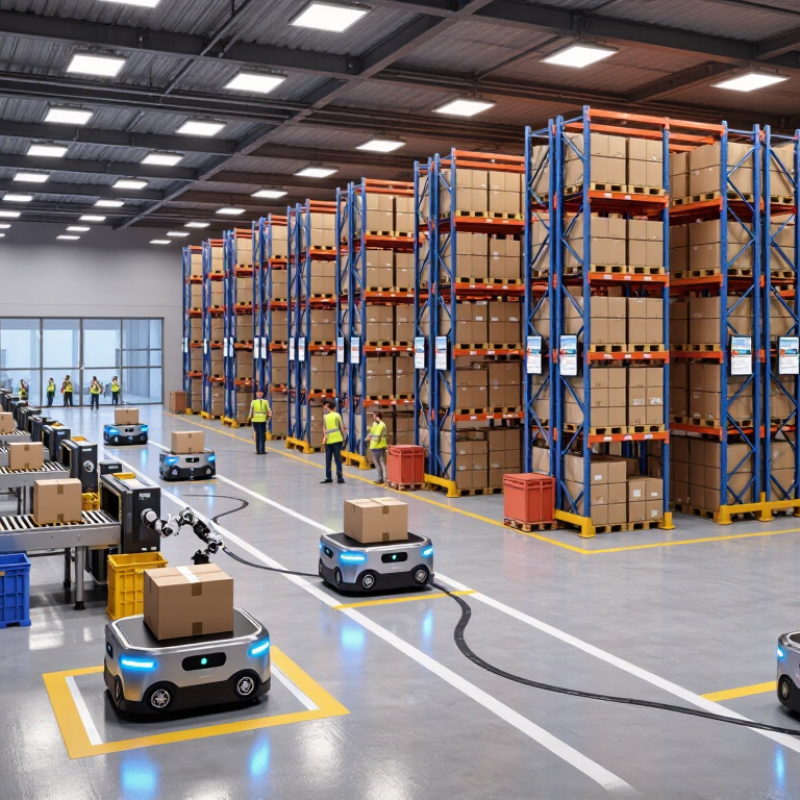
Top 10 Future Opportunities in Logistics Automation

Market Baseline: IFR Recorded 541,302 Industrial Robots Installed in 2023

Top 10 Future Opportunities in Logistics Automation

Market Baseline: IFR Recorded 541,302 Industrial Robots Installed in 2023

The International Federation of Robotics recorded 541,302 industrial robots installed worldwide in 2023. This figure provides a strong baseline for logistics automation, although it does not represent warehouse robots alone. It signals growing investment in repeatable, measurable work. Future opportunities include pallet handling, automated storage, robotic picking, parcel sorting, machine vision, inventory drones, and intelligent route planning. A robot moving cartons beside a loading dock can reduce lifting strain and improve flow during peak hours. Yet automation is not automatically efficient. Poor layouts, unreliable data, or unstable packaging can create expensive delays.

Tips: Begin with one bottleneck. Measure travel time, picking accuracy, downtime, and injury risks before purchasing equipment. Run a controlled pilot for several weeks. Keep trained staff involved, because practical feedback often reveals problems that dashboards miss. Safety barriers, emergency stops, maintenance records, and worker training should be documented clearly. These controls support dependable operations and regulatory compliance.

The next opportunities will likely connect robots with warehouse software and real-time sensors. Systems may adjust storage locations when demand changes, while vision tools check damaged cartons before shipping. Smaller facilities could adopt modular equipment instead of large, permanent installations. That flexibility matters when order volumes fluctuate. Still, I would question any forecast promising effortless automation. Human judgment remains essential for unusual parcels, system failures, and changing customer needs. The 541,302 installation figure shows momentum, not guaranteed success. Each project needs local testing, transparent metrics, and honest review of what went wrong.

Warehouse Robotics: MHI 2024 Reports 55% of Firms Increasing Tech Investment

Warehouse robotics is moving from pilot projects into everyday operations. A 2024 logistics industry report found that 55% of firms are increasing technology investment. That figure signals confidence, but it also reveals pressure. Labor shortages, tighter delivery windows, and rising order variety are forcing warehouses to change.

In a busy facility, mobile robots can carry totes between storage aisles and packing stations. Robotic arms can sort cartons, while vision systems check labels and damaged packaging. These tools reduce repetitive walking and improve measurement. However, automation does not remove every problem. Poor inventory data can send robots to the wrong location. Narrow aisles can create delays. A weak maintenance plan may stop an entire workflow.

The strongest opportunities will combine robotics with skilled workers. Staff still manage exceptions, inspect unusual items, and improve daily processes. Investment should begin with clear evidence, such as walking distance, picking errors, and order delays. The 55% figure is encouraging, yet survey results do not guarantee a return. Each warehouse has different layouts, products, safety needs, and budgets. Some companies may automate too quickly and discover that simple process changes would have solved more. Small trials, honest performance reviews, and careful worker training can expose those weaknesses before expansion.

AI Planning and Digital Twins: DHL 2024 Identifies AI as a Logistics Trend

AI planning and digital twins are moving logistics from reactive control toward tested anticipation. A digital twin mirrors warehouses, vehicles, orders, and labor in near real time. AI then tests thousands of routing and staffing scenarios before managers change the physical operation. The International Federation of Robotics reported 541,302 industrial robots installed globally in 2023. That expanding automation base creates richer operational data for planning systems. Yet data quality remains uneven. A perfect simulation can still produce a poor decision.

The World Economic Forum’s Future of Jobs Report 2023 found that 75% of surveyed companies expected to adopt AI within five years. In logistics, adoption should begin with measurable problems, such as dock congestion or empty return journeys. For example, a twin can show how a 20-minute receiving delay affects afternoon dispatches. Planners can compare fuel use, labor hours, service levels, and disruption risk. Human judgment remains necessary. The model may be confidently wrong when weather, supplier behavior, or informal workarounds change suddenly.

Tips: Start with one warehouse zone and clean its timestamps first. Build a simple baseline before adding advanced AI. Test recommendations against three months of real exceptions. Keep an approval step for high-impact changes. Review failed predictions weekly; those errors often reveal missing data, not careless users. Thin data breaks clever systems.

Future Opportunities in Logistics Automation

Expected share of organizations adopting selected technologies by 2027. AI supports planning and optimization, while cloud and IoT provide core capabilities for digital-twin applications.

Source: Global employer technology-adoption survey, 2023. Figures represent the percentage of surveyed organizations expecting adoption by 2027.

Autonomous Fleets and Drones: UNCTAD Reports Ships Carry Over 80% of World Trade

Top 10 Future Opportunities in Logistics Automation: Autonomous Fleets and Drones

More than 80% of global trade by volume moves by sea, according to UNCTAD’s Review of Maritime Transport 2024. The scale is enormous. Autonomous vessels could improve route planning, fuel efficiency, and night-time monitoring across busy shipping corridors. However, ocean autonomy still depends on reliable sensors, secure communications, trained shore teams, and clear international operating rules.

The strongest opportunities extend beyond the vessel. Ports can connect autonomous ships with automated cranes, smart gates, and predictive maintenance systems. Inland fleets may use assisted driving for repetitive highway routes, while drones handle urgent, lightweight deliveries between warehouses, vessels, and remote sites. The International Transport Forum reports that automation can reduce operating costs, but workforce transition and infrastructure gaps remain serious concerns. I may be too optimistic about speed. A delayed signal or poor weather can disrupt a carefully planned chain.

Tips: Start with controlled routes and measurable tasks. Test one vehicle, one port zone, or one drone corridor first. Track delivery time, energy use, near-misses, maintenance hours, and human interventions. Compare results against manual operations before expanding. UNCTAD also highlights shipping’s exposure to congestion, disruptions, and environmental pressure. Automation should therefore support resilience, not only reduce labour costs. Small errors travel far.

Top 10 Future Opportunities in Logistics Automation - Autonomous Fleets and Drones: UNCTAD Reports Ships Carry Over 80% of World Trade

No. Future Opportunity Primary Logistics Area Automation Model Expected Adoption Horizon Key Operational Value Evidence-Based Data Point Main Implementation Requirement
1 Autonomous Ocean Freight Operations Long-distance maritime transport Remote monitoring, decision support and progressively autonomous navigation 2026–2040 Reduced crew workload, improved route consistency and continuous voyage monitoring Maritime shipping carries more than 80% of world trade by volume and over 70% by value. International rules for remote control, collision avoidance, cybersecurity and liability
2 Autonomous Port and Yard Fleets Container terminals, storage yards and intermodal hubs Driverless yard tractors, automated cranes and fleet orchestration software 2025–2035 Higher equipment utilization, more predictable container movements and safer work zones Port operations connect maritime transport with road and rail, making them a critical transfer point for global trade. High-accuracy positioning, standardized vehicle communication and controlled operating areas
3 Autonomous Regional Trucking Highway freight and port-to-distribution-center routes Supervised autonomous driving with remote assistance and automated dispatch 2027–2038 Longer operating windows, improved asset utilization and reduced exposure to driver shortages The road-freight sector is a major contributor to logistics emissions, so route optimization and higher vehicle utilization have measurable efficiency potential. Safety validation, highway regulations, remote-operation protocols and reliable roadside connectivity
4 Drone-Based Last-Mile Delivery Small parcels, urgent documents and lightweight medical supplies Uncrewed aerial delivery on approved routes 2025–2035 Faster delivery to remote, congested or difficult-to-access locations Civil aviation authorities commonly distinguish visual-line-of-sight and beyond-visual-line-of-sight operations, with the latter requiring additional authorization. Airspace integration, detect-and-avoid systems, landing-site controls and privacy safeguards
5 Automated Warehouse Mobile Robots Picking, replenishment, sorting and internal transport Autonomous mobile robots coordinated through warehouse-control systems 2025–2030 Reduced walking time, flexible throughput scaling and improved inventory movement visibility Warehouse automation is particularly suitable for repetitive, high-frequency movement tasks in structured indoor environments. Accurate inventory data, safe human–robot interaction and integration with warehouse-management software
6 AI-Powered Route and Load Optimization Multimodal planning across sea, road, rail and air Predictive analytics, dynamic routing and automated load matching 2025–2030 Lower empty mileage, better capacity utilization and earlier disruption response UNCTAD identifies shipping, ports and supply-chain connectivity as important factors in the resilience of international trade. High-quality historical data, standardized shipment identifiers and human oversight of critical decisions
7 Automated Cold-Chain Monitoring Food, pharmaceuticals and temperature-sensitive cargo Connected sensors, predictive alerts and automated exception workflows 2025–2030 Reduced spoilage, faster intervention and stronger chain-of-custody records Many temperature-sensitive products require continuous monitoring because storage limits can vary by product and shipment stage. Calibrated sensors, validated temperature ranges, reliable connectivity and auditable records
8 Digital Twins for Ports and Distribution Networks Port planning, warehouse capacity and multimodal network design Real-time simulation linked to operational data and predictive models 2026–2035 Improved congestion forecasting, asset planning and disruption-response testing Maritime supply chains involve multiple connected stages, so delays at one node can affect inland transport and inventory availability. Interoperable data standards, real-time event feeds and validated simulation assumptions
9 Robotic Inspection and Predictive Maintenance Ships, containers, trucks, rail equipment and warehouse machinery Computer vision, drones, acoustic sensors and condition-based maintenance 2025–2032 Earlier fault detection, fewer unplanned stoppages and safer inspections Remote inspection can reduce the need for personnel to enter hazardous, elevated, confined or difficult-to-access areas. Reliable defect datasets, inspection standards, sensor calibration and qualified human verification
10 Autonomous Reverse Logistics and Circular Freight Returns, reusable packaging, repair flows and recycling logistics Automated sorting, robotic handling and AI-assisted disposition decisions 2026–2035 Lower processing costs, better material recovery and improved asset reuse Circular logistics requires traceability of products, components and materials across multiple recovery and transport stages. Item-level identification, standardized condition data and coordinated collection networks
Data note: Maritime-trade figures are based on UNCTAD maritime transport reporting. Adoption horizons are planning ranges rather than guaranteed forecasts and depend on regulation, infrastructure, safety validation, labor policies and investment conditions.

IoT, Green Automation, and Skills: ILO Data Guides Human-Centered Deployment

The next decade in logistics automation will be shaped by people, not machines alone. IoT sensors can track temperature, vibration, energy use, and worker proximity across warehouses. A simple alert can prevent spoiled goods or an avoidable collision. Yet connected equipment creates noisy dashboards. Managers need clear thresholds, reliable maintenance, and trained staff who can challenge faulty readings. ILO research and guidance connect technology adoption with skills, safety, and decent work.

Green automation offers practical opportunities beyond lower fuel bills. Route systems can reduce empty trips, while smart conveyors adjust speed during quiet periods. Battery charging can follow renewable electricity availability. Reuse and repair should guide equipment design. These gains require measurement, not marketing claims. A logistics team should compare energy per parcel, downtime, injury risks, and training hours before expanding a pilot. Small warehouses may need shared technical support. Their constraints are real.

The strongest opportunities will combine technicians, drivers, planners, and worker representatives. Short training sessions can cover sensor checks, emergency stops, data privacy, and manual fallback procedures. Workers should test interfaces beside loading bays, where glare, noise, and cold expose design weaknesses. The floor decides. Some pilots fail because leaders buy equipment before mapping daily work. That mistake is fixable, but not quickly. Human-centered deployment requires worker feedback, careful ILO-based review, and slower rollout when safety evidence remains incomplete.

FAQS

Why are warehouses increasing investment in robotics?

Labor shortages, tighter delivery windows, and more varied orders are driving investment. Mobile robots can carry totes between aisles and packing stations. The trend looks strong, but investment alone does not guarantee savings.

What tasks can warehouse robots handle?

Mobile robots transport bins. Robotic arms sort cartons. Vision systems check labels and damaged packaging. Workers still manage unusual items, exceptions, and process improvements.

What problems can reduce robotics performance?

Poor inventory data can send robots to incorrect locations. Narrow aisles may cause traffic delays. Weak maintenance can stop a complete workflow. Small data errors become expensive.

How should a warehouse begin an automation project?

Start with one controlled task or zone. Measure walking distance, picking errors, delays, and maintenance hours. A small trial may reveal that simpler process changes work better.

Can autonomous vessels improve maritime logistics?

They may improve route planning, fuel use, and night monitoring. More than 80% of global trade volume moves by sea. Reliable sensors, secure communication, and trained shore teams remain essential.

How can ports test autonomous transport safely?

Test one vehicle, port zone, or drone corridor first. Track delivery time, energy use, near-misses, repairs, and human interventions. Bad weather can disrupt a carefully planned chain.

How do sensors support safer logistics operations?

Sensors can monitor temperature, vibration, energy use, and worker proximity. An alert might prevent spoiled goods or a collision. Dashboards can become noisy, so teams need clear thresholds and regular checks.

What skills do workers need in automated facilities?

Training should cover sensor checks, emergency stops, data privacy, and manual fallback procedures. Workers should test equipment near loading bays. Glare, noise, and cold may expose design weaknesses.

Can automation reduce environmental impact?

Route systems can reduce empty trips. Smart conveyors can slow during quiet periods. Charging can follow renewable electricity availability. Teams should measure energy per parcel, downtime, injury risks, and training hours.

What role should workers have during automation?

Workers should review interfaces, test safety procedures, and report practical problems. Skilled staff handle exceptions and unusual items. Machines help, but the floor decides.

Conclusion

What Are The Future Opportunities In Logistics Automation? The next wave of growth will come from combining robotics, artificial intelligence, digital twins, autonomous vehicles, drones, and connected IoT systems. With more than 541,000 industrial robots installed in 2023 and over half of logistics companies increasing technology investment, businesses are expected to expand automated warehouses, intelligent sorting, predictive maintenance, and real-time inventory management. These solutions can improve accuracy, reduce delays, and support more flexible operations across increasingly complex supply networks.

Autonomous fleets and delivery drones may further improve transportation efficiency, while digital planning tools can simulate routes, capacity, and disruptions before decisions are implemented. Green automation will also create opportunities through energy-efficient equipment, optimized transportation, and lower material waste. However, successful adoption will depend on human-centered deployment, including workforce training, safe collaboration between people and machines, and the development of new technical roles. Together, these trends can create a more resilient, sustainable, and productive logistics industry.

Mason

Mason

Mason is a seasoned marketing professional with a deep expertise in the company's offerings and a passion for driving brand awareness. With a strong background in digital marketing strategies, he has an innate ability to connect with diverse audiences and effectively communicate product benefits.......