 Lunasol Logistics
These four configurations are the most frequently specified starting points for Novosibirsk food, beverage, warehouse and distribution projects. Each system can operate as a standalone cell or as part of a conveyor-integrated end-of-line line, with Russian-language documentation and EAC-oriented technical files prepared for the project.
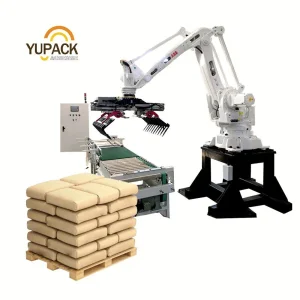
A complete bag-handling cell that flattens, aligns and stacks bags before palletizing. The infeed conveyor, bag flattener and robot work as one controlled line, improving pallet stability and reducing manual lifting in Novosibirsk food, grain and chemical plants.
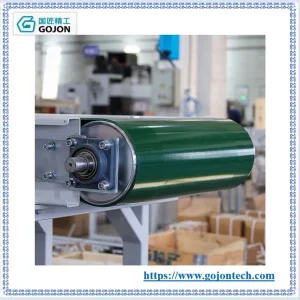
A heavy-duty, high-capacity conveyor and robotic handling platform engineered around variable SKUs, pallet sizes and plant layouts. Modular sections, accessible drives and condition monitoring simplify maintenance through a Siberian winter and keep total cost of ownership predictable.
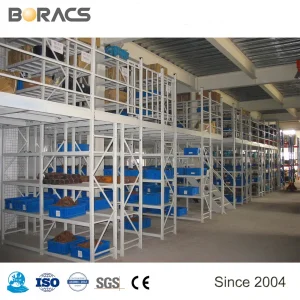
Add usable floor area without a new building: a structural mezzanine with conveyor cut-outs, safety guarding and robotic picking interfaces. It suits e-commerce fulfilment and spare-parts warehouses serving Novosibirsk, Omsk, Krasnoyarsk and Kazakhstan.
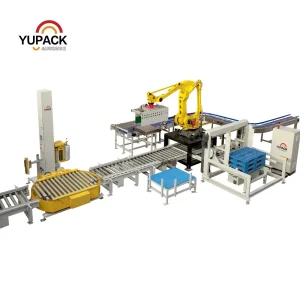
A beverage-ready end-of-line cell combining pallet supply, conveyor transport, material alignment, robotic palletizing and stretch wrapping. Wet-area components and line-level controls support high shift output with consistent pallet quality.
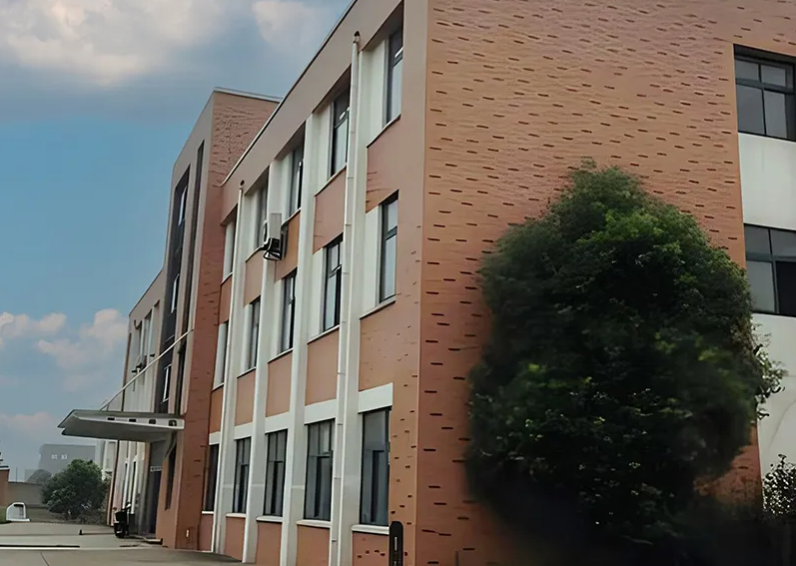
Daian Lunasol Logistics Technology Co., Ltd. is located in Dalian City. Our company focuses on R&D, production, sales, technical support and after-sales service in the fields of automation and robotics. The main products include: AGV and AGC automatic guided vehicles, industrial robots, automated production lines, etc. Our product line covers light-duty handling robots from 0.5 tons, medium-heavy lifting robots from 2 tons to 5 tons, and heavy-duty handling robots from 5 tons to 100 tons. Product categories include latent traction AGV, roller AGV, lift AGV, traction AGV, load-bearing AGV, forklift AGV, medium and heavy-duty linkage AGV.
Our products serve the automobile, logistics and warehousing, shipbuilding industry, iron and steel metallurgy, special vehicles, high-speed rail and subway, injection molding, electronics and other industries. High-quality cooperation units include FAW Flag, CIMC Group, Yada New Materials, Zoomlion, Russia Federal Railways etc.
Our company has researched foreign advanced technology and conducted independent research and development. It has mastered the core technology of the product and has independent intellectual property rights. It has developed the core components of AGV, AGV guidance controller, AGV guidance sensor, lithium battery management system, and online charging system, becoming a domestic technology-based enterprise with advanced technology and complete products.
Let us go all out to be the leader of the new generation of smart devices.
Novosibirsk is the largest city in Asian Russia and the administrative centre of the Siberian Federal District. For automation suppliers, it combines a diversified industrial base, a strategic rail and air gateway, a strong engineering talent pool and one of the harshest operating climates in the world.
The Trans-Siberian Railway, R-254 federal highway and Tolmachevo airport connect Novosibirsk with European Russia, the Kuzbass industrial region, Krasnoyarsk, Kazakhstan and East Asia. Many projects are specified in Novosibirsk but deployed across the wider Siberian district, so documentation and service coverage must extend beyond the city boundary.
Machine building, power engineering, food and beverage processing, pharmaceuticals, chemicals, construction materials and logistics all coexist in the Novosibirsk agglomeration. That diversity creates demand for both high-speed end-of-line palletizing and heavy-duty cross-floor handling.
Akademgorodok and Novosibirsk State Technical University support a strong pool of engineers, software specialists and maintenance technicians. However, operators for repetitive manual tasks are increasingly difficult to recruit, which makes automation a practical response to labour scarcity as well as a route to higher output.
Winter design conditions can fall below −30 °C, with rapid temperature change at loading docks, snow contamination and condensation on cold metal. Conveyor and robot packages need cold-rated lubrication, heated enclosures where necessary, IP-rated sensors, flexible cable jackets and a documented cold-start sequence.
Since 2022, the regional supply mix has been rebalancing. Buyers compare Chinese, Turkish, Korean, Belarusian and domestic Russian equipment, and they demand evidence rather than brochure claims. Factory audits by video, reference calls, material certificates, control drawings and spare-parts lists have become normal parts of the procurement process.
Three project archetypes dominate. First, food, beverage and pharmaceutical plants are replacing manual end-of-line palletizing with robotic cells and integrated stretch wrapping. Second, e-commerce and third-party logistics operators are adding mezzanine floors, conveyor cut-outs and picking stations inside existing buildings. Third, heavy industry — metallurgy, special vehicles, shipbuilding supply chains and power engineering — needs cross-floor lifting and heavy-load transfer that cannot be solved by standard forklifts alone.
Each archetype has a different acceptance logic. A food plant cares about hygiene, changeover and pallet stability; a pharma plant cares about documentation, traceability and repeatability; a 3PL cares about peak throughput and layout flexibility; heavy industry cares about structural loading, safety and maintainability. A Novosibirsk-specific technical review should start with the acceptance criteria, not the equipment list.
The technology conversation in Novosibirsk has moved beyond “robot or no robot.” Buyers now ask how fixed conveyors, robotic cells, mobile robots and software will work together as a reconfigurable material-flow system.
Welded, project-specific lines are being replaced by bolted modules, standard drive stations and pre-engineered transfer units. This reduces design lead time, simplifies spare-parts stocking in Novosibirsk and allows capacity to be added in phases without rebuilding the entire line.
3D vision and AI-assisted pattern generation allow mixed-SKU pallets, variable bag shapes and unstable packaging to be handled without hard tooling. The practical benefit is faster changeover and less engineering work for every new product introduced.
Conveyors remain the most energy-efficient way to move high volumes, while AMRs provide flexibility at line ends and across floors. Hybrid designs use fixed conveyors for the trunk route and mobile robots for picking, replenishment and pallet transfer.
Before steel is cut, throughput, buffer sizing, robot cycle time and pallet patterns can be simulated. For a remote export project, a digital twin reduces site-survey uncertainty and gives the Novosibirsk team a shared acceptance model.
Vibration, current and temperature data from drives, gearboxes and robots support condition-based service. When travel distance makes every site visit expensive, remote diagnosis and pre-planned interventions become a core economic advantage.
Regenerative drives, IE3/IE4 motors and intelligent standby reduce energy demand. Cold-weather packages address lubricant viscosity, cable flexibility, condensation and start-up sequencing, which are decisive in Novosibirsk winters.
Across Siberia, purchase committees are not simply buying a robot or a conveyor. They are buying guaranteed flow, documented compliance and a service model that survives distance and winter.
International procurement teams sourcing for Novosibirsk plants typically evaluate five layers: mechanical design, controls architecture, safety compliance, logistics and lifecycle support. A supplier that can quote a robot but cannot provide a Russian-language risk assessment, a spare-parts list or a commissioning plan is usually excluded before the technical comparison begins.
Demand from Russian retailers, 3PL operators, food processors and pharmaceutical manufacturers has become more specific. Tender documents increasingly require cycle-time guarantees, pallet pattern validation, FAT/SAT protocols, cybersecurity provisions for remote access and a clear division of installation responsibilities. Chinese factories with export engineering teams are well placed to meet these requirements when they plan compliance in parallel with manufacturing.
At the same time, buyers are more price-aware than ever. The winning offer is rarely the lowest initial quotation; it is the offer with the lowest risk-adjusted total cost of ownership. That calculation includes freight to Novosibirsk, customs clearance, winter commissioning, operator training, spare-parts inventory and the cost of unplanned downtime.
Proposals should therefore separate scope into base machine, site-specific integration, documentation, freight, commissioning and service. This transparency makes comparison easier and prevents hidden costs from appearing after the purchase order.
The right architecture depends on product, building, labour model and compliance route. These six solution families cover the majority of Novosibirsk project inquiries.
Palletizing, stretch wrapping, hygienic conveyors, cold-chain transfer and line control for dairies, bakeries, beverage bottlers and grain processors across Novosibirsk Oblast.
End-of-line palletizing with pallet magazines, synchronized conveyors, automatic alignment and documented change control for pharmaceutical production and logistics.
Mezzanine structures, conveyor cut-outs, picking stations, accumulation and scalable sortation for fulfilment centres serving Siberia and northern Kazakhstan.
Fork-arm lifters, cross-floor transport and heavy-duty conveyors for 5–100 t loads in metallurgy, shipbuilding supply, special vehicles and power engineering.
Dust-controlled bag flattening, 10–50 kg valve-bag palletizing and robust conveyor components for aggressive or abrasive products.
High-speed die attach, precision indexing and clean handling for QFN/DFN packaging and electronics production in the Novosibirsk instrumentation cluster.
A conveyor system is only as good as the documents, spares and service behind it. Our export model treats compliance and localization as part of the machine, not an afterthought.
| Deliverable | Purpose | Novosibirsk project note |
|---|---|---|
| Technical file | Design basis, risk assessment and drawings | Russian summary supports customs and plant acceptance. |
| EAC certificate or declaration | Mandatory EAEU market access | Confirm scope before purchase order because review time affects delivery. |
| Russian O&M manual | Operator and maintenance instructions | Include safety, lubrication, cold-start and troubleshooting sections. |
| Packing list and HS data | Customs clearance and cargo planning | Match invoice, shipping marks and container loading sequence. |
| FAT/SAT report | Acceptance evidence | Add cold-start checklist and utility verification where specified. |
| Spare-parts list | Lifecycle planning | Identify long-lead drives, sensors and robot consumables before shipment. |
Compliance responsibility is shared. The manufacturer prepares the technical file and product conformity evidence; the importer or its broker manages the customs declaration; the plant provides utilities, safe access and a qualified maintenance team. Clarifying these boundaries at quotation stage prevents expensive assumptions later. Where remote access is used, a customer-controlled VPN, least-privilege accounts and activity logging should be written into the service agreement.
A realistic roadmap separates proven modules from emerging capabilities. Buyers should invest in the proven layer while specifying open interfaces for the next layer.
Standardized conveyor modules, EAC-ready technical files, Russian HMI, cold-climate packages and digital layout reviews become baseline requirements rather than premium options.
3D vision, AI pattern generation, OPC UA and EtherNet/IP gateways, and conveyor-to-AMR handover reduce manual changeover and improve mixed-SKU handling.
Digital twins move from design tools to operations dashboards. Predictive maintenance and energy-aware scheduling optimize throughput across lines, floors and shifts.
Open protocols, modular mechanical interfaces, accessible spare parts, remote-access policy, energy monitoring and a documented data model reduce the cost of every future intervention in Siberia.
Pharmaceutical production and logistics projects often require tighter documentation, controlled material flow and repeatable pallet presentation. These four configurations address those requirements.
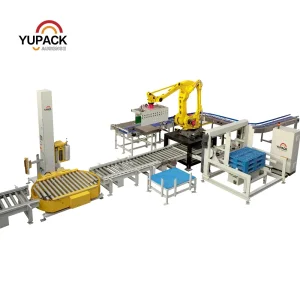
A pharmaceutical-focused palletizer and stretch film wrapping system with pallet storage, conveyor integration and automatic alignment. The layout supports regulated production with a clear material flow and documented component traceability.
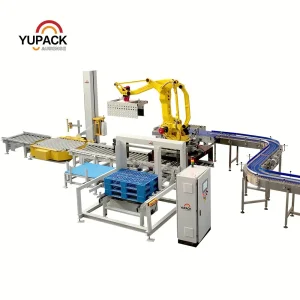
High-efficiency palletizing and wrapping with a pallet magazine, synchronized conveyors and auto-arranging for pharmaceutical production. Repeatable cycle times and controlled pallet presentation support audit-ready operation.
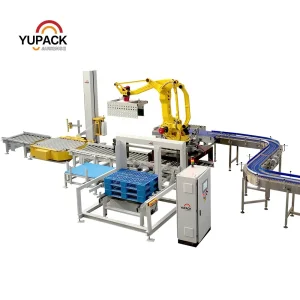
Automated end-of-line palletizing and wrapping for pharmaceutical logistics, combining conveyor transport, a pallet dispenser and robotic handling in a single coordinated work cell.
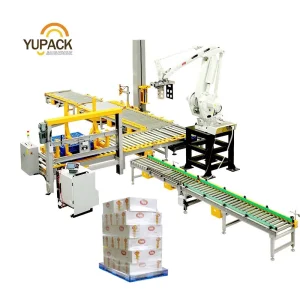
A complete packaging line including stretch wrapper, robotic palletizer, motorized conveyors and pallet dispenser for high-volume production. The integrated design reduces interfaces and simplifies acceptance.
Our products serve the automobile, logistics and warehousing, shipbuilding industry, iron and steel metallurgy, special vehicles, high-speed rail and subway, injection molding, electronics and other industries.
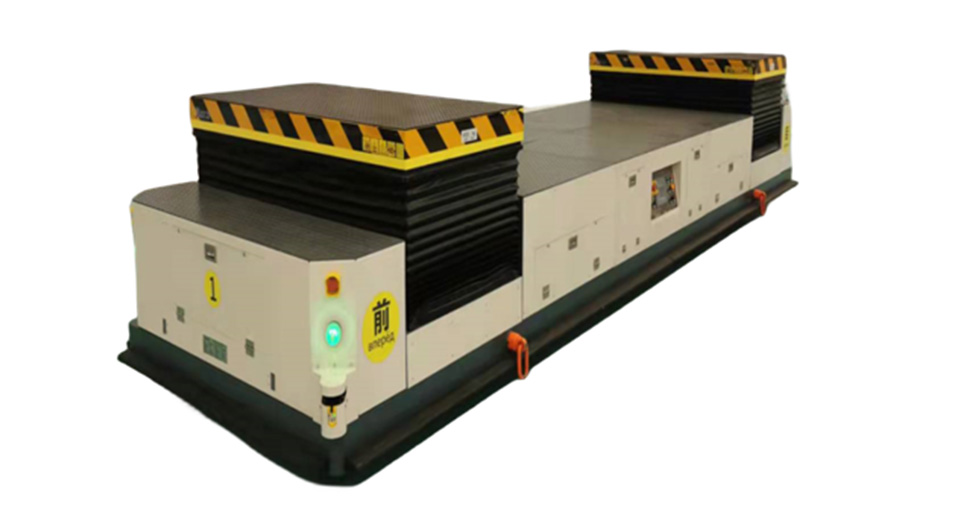
The piggyback AGV adopts a load-bearing body structure, which can be used to support workpieces and travel in all directions, enabling easy transportation of goods in various workshops or workstations. Multiple backpack AGVs can be used together to form an assembly line, replacing the assembly line and forming a flexible production line.
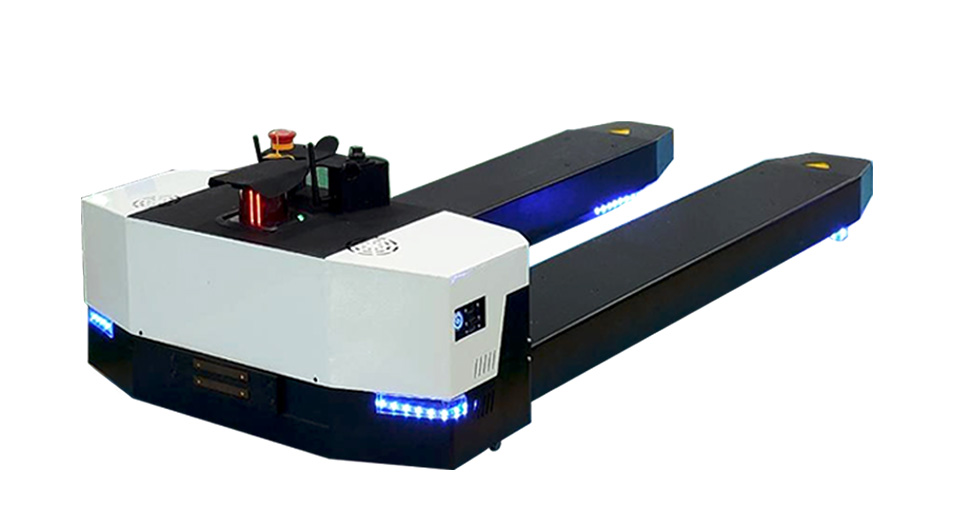
Forklift-type AGVs are widely used in fields such as heavy object lifting and heavy object transportation. They have a small turning radius and low requirements for channel size.
AGV class selection, conveyor handover, safety zoning, Russian HMI, spare-parts kits and commissioning planning are reviewed together with the robotic conveyor scope so that mobile and fixed automation operate as one system.
High-quality cooperation units include FAW Flag, CIMC Group, Yada New Materials, Zoomlion, Russia Federal Railways etc.
These are the questions most frequently raised by Novosibirsk buyers during technical and commercial review. Each answer assumes a real project with site-specific acceptance criteria.
The system must be specified for the real ambient range, not a generic European temperature band. A winter-ready package typically includes cold-rated gearbox lubricants, PUR or cold-flexible cable jackets, heater circuits for HMI and pneumatic components, IP-rated sensors, condensation management and a cold-start sequence. Where the buyer requires it, cold-weather checks are included in the factory acceptance test and the site start-up checklist. The exact package depends on whether equipment is installed indoors, in a heated vestibule or on an unheated dock.
We prepare the technical file, drawings, risk-assessment inputs, Russian-language manual and nameplate data, then coordinate with an accredited certification body for the applicable EAEU technical regulations. Customs documents normally include the commercial invoice, packing list, certificate of origin, HS classification and technical description. Certification should be planned before the purchase order because test and review lead times affect the shipping date. The importer remains responsible for the customs declaration, usually through a licensed broker.
Yes, after an interface audit. We review the existing conveyor layout, PLC platform, network protocol, safety architecture and data points. Typical interfaces include PROFINET, EtherNet/IP, Modbus TCP, hard-wired safety signals and OPC UA gateways. Where the old equipment is undocumented, we propose a phased migration that keeps production running and isolates responsibilities at clearly defined terminals.
For a customized robotic conveyor or palletizing line, plan the project in parallel streams: engineering, manufacturing, certification, freight, site preparation and commissioning. A realistic planning window is often 16–24 weeks from purchase order to site readiness, with certification and rail freight running alongside manufacturing. Repeat orders and standard modules can be shorter. The quotation should state the assumed scope, utility readiness and site access because each can change the schedule.
Most industrial systems are configured for 380–400 V, three-phase, 50 Hz with protective earth, although we confirm the plant standard before design freeze. Compressed air should be dry and filtered, typically 6–8 bar, with capacity calculated for grippers and pneumatic actuators. Floor flatness and load-bearing capacity must be verified for robots, mezzanines and pallet buffers. A site survey should also record door heights, container access, crane capacity and network routes.
We recommend a 12–24 month critical spare-parts kit based on the actual bill of materials, including long-lead drives, sensors, robot consumables, gripper components and safety devices. Remote diagnostics can be provided through a customer-approved VPN with least-privilege access. On-site service is delivered through qualified local partners, with our engineering team providing remote support and escalation. A service agreement should define response times, escalation paths and the boundary between operator maintenance and specialist repair.
Throughput depends on robot reach, payload, pallet pattern, product presentation, wrapping cycle and buffer size. A single robot cell may suit moderate output, while twin-cell or high-speed bag systems are used for higher rates. The correct approach is to specify average and peak pallets per hour, product mix and changeover frequency. We then validate cycle time with a simulation and, where practical, a factory acceptance test using the customer's product samples.
The handling strategy starts with product testing. Bag flatteners, forming conveyors, alignment units, vacuum or clamp grippers, and vision checks are selected according to bag type, fill level and surface friction. Pallet patterns are validated for interlocking and overhang, and stretch wrapping parameters are tuned to the load. For pharmaceutical or high-value products, we add traceability and reject handling rather than relying on operator inspection.
Send product dimensions and weights, bag or carton type, required throughput, pallet and slip-sheet specification, stack height, existing layout and conveyor data, utility details, ambient conditions and the required documentation. Also state the EAC route, preferred Incoterm, installation responsibilities, spare-parts expectation and any site-specific safety standard. A marked-up layout drawing or video of the current line reduces engineering uncertainty significantly.
Yes. We combine conveyor cut-outs, mezzanine interfaces, robotic picking stations, fork-arm lifters and multi-level distribution systems into one material-flow design. Structural design of the building and mezzanine normally requires a local engineer, while we provide equipment loads, interface points, guarding requirements and control logic. This coordinated approach avoids the common problem of a conveyor package that cannot be physically connected to the floor structure.
Remote access is optional and customer-controlled. We recommend a dedicated VPN tunnel, least-privilege accounts, time-limited sessions and activity logging. The system can be designed to operate fully offline for production, with remote access enabled only during service windows. Where Russian data-localization requirements apply, the project team defines what data may leave the plant and what must remain on the local historian.
Modularity should be designed in from the start: spare conveyor connection points, reserved control cabinet space, scalable safety zones and standardized pallet interfaces. We document the reserved capacity and the interface data so a second robot, additional accumulation or an AMR handover can be added later. This is especially important in Novosibirsk, where a phased investment often follows a pilot line rather than a single turnkey purchase.
The remaining systems complete the Novosibirsk supply portfolio: heavy-duty lifting, electronics packaging, high-speed bag palletizing, energy-efficient vertical transport, valve-bag handling, food and beverage end-of-line integration, multi-level distribution and modular conveyance networks.
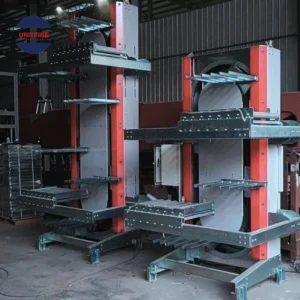
Heavy-duty fork-arm lifting for cross-floor movement of pallets, workpieces and heavy loads where ramps or conventional lifts are not practical. The system can be coordinated with conveyor handover points and safety guarding.
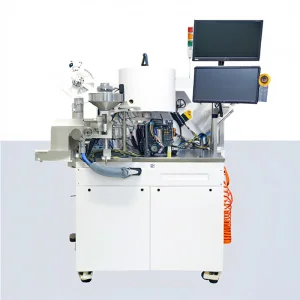
A high-speed die attach platform for QFN and DFN packaging, adding precision electronics manufacturing capability to the portfolio. It is relevant to Novosibirsk's electronics and instrumentation cluster.
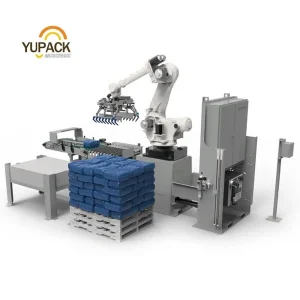
A higher-speed bag palletizing line with bag flattener and curved infeed conveyor. The curved infeed helps fit the cell into existing buildings where straight-line space is limited.
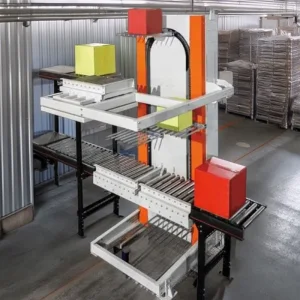
A continuous fork-arm lifting system designed around energy efficiency and smooth vertical flow. It reduces waiting time between floors and supports multi-level production or storage.
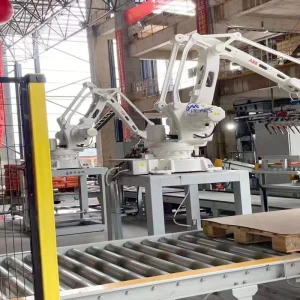
Automatic robotic palletizing for 10–50 kg industrial valve bags, with stable pattern formation and dust-aware handling for chemical, mineral and construction-material plants.
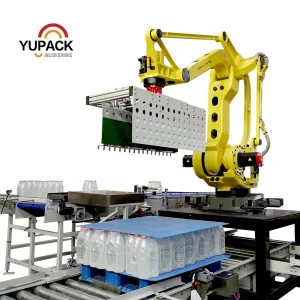
An integrated food and beverage line combining palletizing, stretch wrapping, pallet dispensing, material arranging and conveyor transport. It is configured for wet production environments and high shift output.
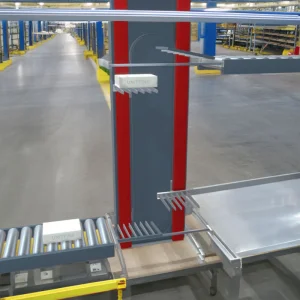
Fork-type multi-level distribution equipment for moving materials between floors and production stages, supporting warehouse and manufacturing layouts with constrained floor area.
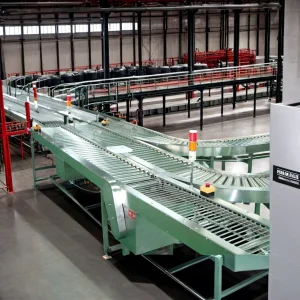
Intelligent modular conveyance with self-powered transport units, adaptive flow and robotic handling. The architecture is suited to reconfigurable warehouses, mixed-SKU lines and phased automation.
Send your product data, throughput target, pallet specification and site constraints. Our export engineering team will respond with a suitable robotic conveyor architecture, compliance route and preliminary scope for Novosibirsk.
Send Inquiry NowTypical inputs: product weight and dimensions, required pallets per hour, ambient conditions, EAC documentation needs, delivery terms and preferred commissioning window.