Lunasol Logistics
Lunasol Logistics
Lunasol Logistics
Intelligent and high-capacity autonomous systems configured to adapt to West African dry port environments and manufacturing hubs.
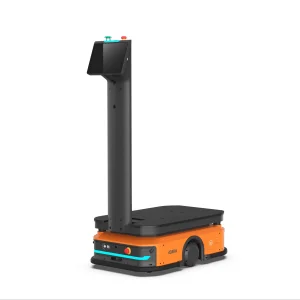
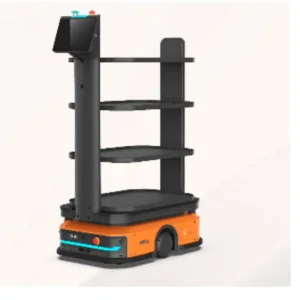
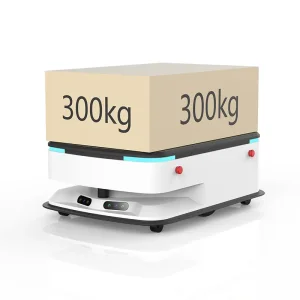
Togo is rapidly establishing itself as the premier logistics hub of West Africa. At the heart of this geopolitical economic shift is the Autonomous Port of Lomé (PAL), the only natural deep-water port in the region, serving as the critical maritime gateway for landlocked neighbors including Burkina Faso, Mali, and Niger. As industrial zones and logistics centers scale up adjacent to the port and within the Adétikopé Industrial Platform (PIA), the pressure to optimize container terminal throughput, raw material flows, and warehousing speed has never been higher.
To sustain this trade acceleration, traditional manual material handling is giving way to automated technologies. Autonomous Mobile Robots (AMRs) and Automated Guided Vehicles (AGVs) represent the technological vanguard necessary to execute high-volume, precision logistics. Moving away from rigid conveyor systems and operator-dependent forklifts, modern Togolese operations are seeking flexible automation platforms that can operate dynamic routing configurations in high-density facilities, mitigating warehouse congestion and reducing localized transit times.

Daian Lunasol Logistics Technology Co., Ltd. is a leading industrial designer and global supplier specializing in the research, development, and manufacture of advanced robotic automation systems. Headquartered in Dalian City, China, our team delivers complete end-to-end material handling solutions, integrating AGVs, AGCs (Automated Guided Carts), industrial manipulators, and complex automated assembly lines. Our technological footprint covers a comprehensive payload spectrum designed to address varied commercial needs:
Our navigation capabilities include latent traction, roller bed integration, hydraulic lift integration, tow-train AGVs, and direct load-bearing models. Leveraging proprietary navigation algorithms (specifically Laser SLAM, Visual SLAM, and high-accuracy magnetic tape systems), Daian Lunasol ensures that modern industrial operators in Togo and across the globe receive robust, future-proof machinery that runs autonomously without relying on extensive infrastructure changes.
Deploying advanced autonomous systems in Togo requires careful engineering to combat localized operating challenges. Togo's tropical climate features significant ambient heat, humidity, and atmospheric dust levels (particularly during the Harmattan season). Our systems are ruggedized specifically to counteract these factors:
Laser scanners, Lidar arrays, and optical sensors on our AMRs are fitted with specialized protective shrouds and pressurized lenses to prevent particulate build-up. We utilize optical modules with advanced signal processing to filter out airborne dust particles, ensuring the safety detection zone is never falsely triggered, avoiding unnecessary warehouse downtime. Fleet control enclosures are rated at IP54 and IP65 to protect structural circuitry from tropical condensation.
Given the occasional voltage fluctuations within the West African power grid, our automated online charging stations are fitted with integrated voltage stabilization systems. Additionally, for enterprises aiming to achieve green carbon mandates within the Adétikopé Industrial Platform, Daian Lunasol's intelligent lithium battery management systems (BMS) are fully compatible with local commercial solar photovoltaic microgrids, allowing off-grid automated recharging.
All imported industrial machinery must satisfy the safety criteria set by the Economic Community of West African States (ECOWAS) and Togo's customs administration. Our shipping logistics framework manages all necessary declarations, guaranteeing that every machine arrives with compliant CE labeling, ISO 9001 quality certificates, and complete mechanical wiring documents according to EN ISO 3691-4 international safety standards for driverless industrial trucks.
Global procurement specialists understand that sourcing industrial automation requires balancing capital expenditure (CAPEX) with long-term reliability. Partnering with Daian Lunasol bridges this gap by leveraging the unparalleled industrial density of China's automation supply chain:
Our raw materials, electronic controllers, hydraulic actuators, and structural chassis are sourced directly from China’s leading industrial manufacturing zones. This concentration allows us to rapidly prototype, assemble, and factory-test heavy-duty machines at a fraction of the cost of European or North American competitors. This economic advantage translates directly to lower acquisition costs and a much faster Return on Investment (ROI) for Togolese businesses.
Furthermore, Daian Lunasol maintains independent intellectual property rights over critical components, including our self-developed AGV guidance controllers, multi-sensor fusion algorithms, online charging control systems, and central fleet dispatch software. This vertical integration guarantees that we are not dependent on third-party software licensing, allowing us to provide direct API access, customize layouts, and export complete spare parts kits directly to Lomé without regional shipping delay bottlenecks.
Integrating autonomous mobile robots into the Togolese economy presents clear efficiency gains across several target verticals:
AMR systems configured with 5-ton to 15-ton load capacities can automate the transfer of unitized cargo from container stripping yards to secure transit warehouses. Because they work continuously without operator shifts, they accelerate container turn-around times, allowing regional shipping lines to optimize berth schedules and avoid expensive port congestion surcharges.
Agricultural exports are a pillar of Togo's economy. AMRs equipped with specialized hydraulic pallet clamping attachments can navigate raw agricultural processing facilities, transporting large sacks of cocoa and coffee beans from sorting lines to bagging stations and storage areas, optimizing throughput while minimizing manual labor hazards.
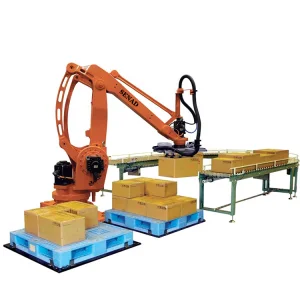
Local consumer demand and regional exports of beverages require continuous pallet movement. Our automated palletizing and underride AMRs can transport palletized finished products from automated bottling lines to deep-lane storage racks. The software interface integrates with existing warehouse management systems (WMS) to track inventory in real-time, preventing product loss and optimizing batch control.
Engineered for absolute durability, seamless software integration, and optimal safety compliance.
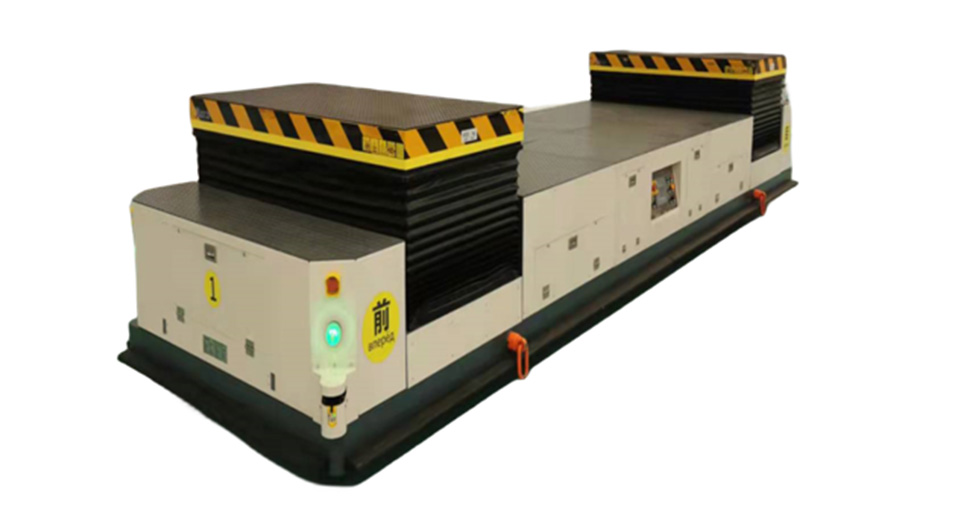
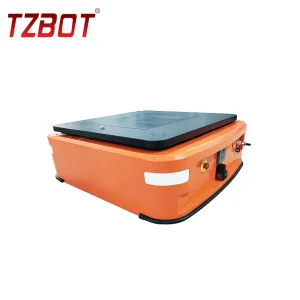
Our piggyback/carrier AGVs utilize a structural load-bearing platform designed to support heavy materials and travel in multi-directional routes across factory floors. Multiple units can be synchronized to form dynamic assembly lines, effectively replacing standard fixed conveyors. This is highly suitable for automotive components, packaging assembly lines, and high-frequency machinery transit zones.
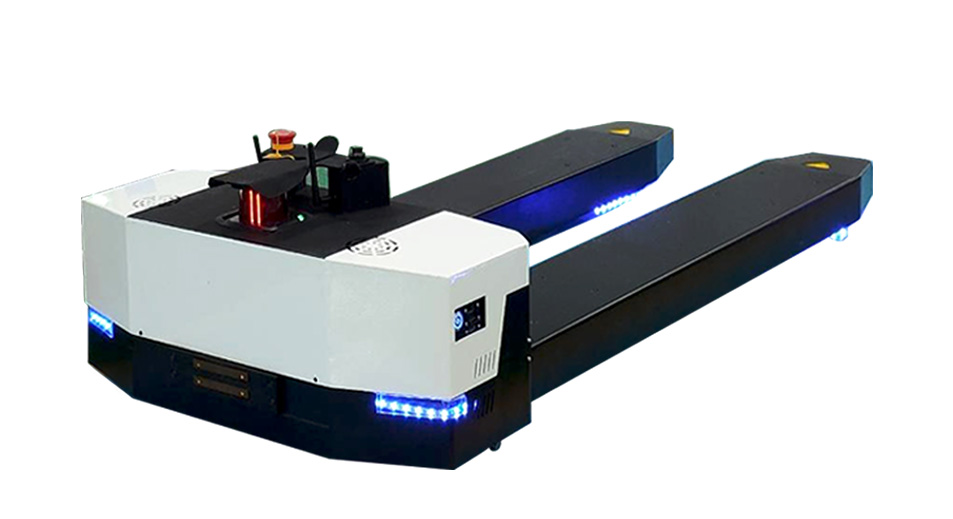
Specially engineered for vertical warehouse integration and heavy cargo pallet transport. Featuring a minimal turning radius, our forklift AGVs require narrower aisle widths compared to conventional manual forklifts, maximizing overall warehouse storage volume and optimizing vertical rack positioning.
Answers to technical and commercial queries concerning AMR deployments in West Africa.
Automated Guided Vehicles (AGVs) travel along predefined physical pathways, typically using magnetic tape or wires embedded in the warehouse floor. While highly efficient for simple loops, they require floor modifications. Autonomous Mobile Robots (AMRs) utilize Laser/Visual SLAM to build virtual maps of the facility. They actively detect obstacles and dynamically recalculate paths, offering much higher flexibility in busy warehouses.
Our AMRs feature heat-dissipating cooling configurations and sealed IP-rated enclosures for key electronic units. Lidar scanners are paired with secondary optical filtering algorithms to ensure the laser beam reflection is not distorted by dust particles. Standard maintenance recommendations include periodic cleaning of optical lenses using compressed air.
Yes. Our Central Dispatch System features an open API architecture supporting integration with standard WMS platforms (including SAP, Oracle, and local custom ERP solutions). This enables automated order dispatching, dynamic fleet routing, and real-time inventory tracking.
Standard custom configurations take between 30 to 45 days to manufacture and factory-test. Sea shipping transit from Dalian Port to Lomé Port typically requires 35 to 45 days. We provide complete tracking documentation and assist with customs clearances through local shipping agencies.
Yes, we provide two deployment options. We can dispatch an engineering team to Lomé for commissioning and localized staff training, or provide comprehensive remote simulation support coupled with detailed video guides and interactive telemetry interfaces for local integration partners.
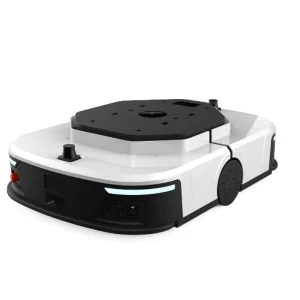
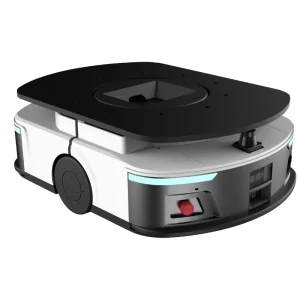
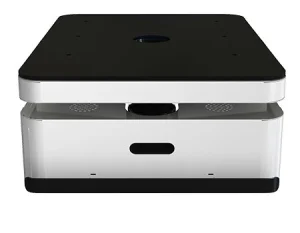
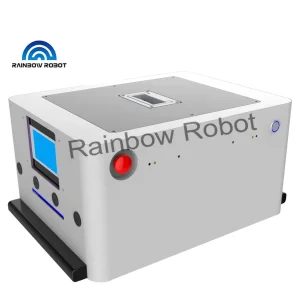
Select from our certified fleet range, customizable to specific local requirements and operational environments.
Partner with an established industrial robot manufacturer. Contact our applications engineering department to request a localized feasibility analysis, customized system pricing, and complete shipping schedules.
Send Inquiry Now